As the race for 2023 Presidential election draws near, individuals and political parties are gearing up for the battle ahead.
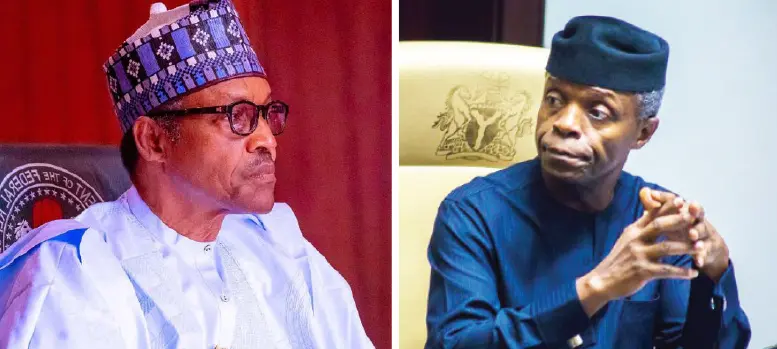
2022 is no doubt, a political year. It is the year that heralds 2023 when Nigeria will enthrone a new president after the current president; Muhammadu Buhari finishes his second term tenure that will bring his eight years rule to an end. Indeed, the year is a fore-runner that is meant to put every structure, processes and procedures in place to ensure that a new helmsman emerges in the polity when election holds.
Flowing from this therefore, it is no surprise that the Nigerian political space is charged and tremendous activities are going on within the political parties, the Independent National Electoral Commission (INEC), which is Nigeria’s electoral umpire, government, civil society groups and every segment of the country. The press is inundated with reports of political activities. In itself, the burden of x-raying the political future of the country has also added to the myriad of agenda setting tasks of the fourth estate of the realm.
Thus, as the country prepares for this all-important task, politicians have been going round marketing their ambitions and aspirations, consulting and even arm twisting. The intrigues are breath taking. Amidst all preparations, Nigeria’s numerous political parties, particularly the two dominant ones, viz, the ruling All Progressive Congress (APC) and its major opposition counterpart, the Peoples’ Democratic Party (PDP), have not been able to find a common ground on zoning of political and party offices. The PDP had last year, organized a national convention after ousting its former elected national chairman, Prince Uche Secondus before his tenure expired. It filled the position of its national National Working Committee (NWC) with a national chairman emerging from the North central in the person of former Senate President, Iyorchia Ayu. This was amidst the controversy of zoning its presidential candidate which the South east is laying claim to. The polity is also full of horse trading as the PDP has continued to play smart as far as zoning its presidential candidate is concerned. Latest information concerning this is that PDP may leave the option open to all but with a bias to the North.
Similarly, the APC has not been able to conduct its national convention since the sack of its erstwhile chairman, Comrade Adams Oshiomhole. The national caretaker committee chairman and governor of Yobe state, Mai Mala Buni is reportedly interested in driving the process that will birth a presidential aspirant. This has led to serious crisis in the party even as the party has eventually put its convention for February 26.
Inspite of the agitation from the South, particularly the southeast for the party to yield the presidential candidate to it, APC, like the PDP has not made any categorical nor official statement on it. The situation has thrown the flood gate of aspirants in both presidential and party chairmanship open in the APC. Beside the party zoning and primaries that would follow, the polity is also not very clear. The national assembly has been busy with electoral bill amendment. When it finished with it late last year, it sent to Mr. President for his assent. Three days to its Christmas and New Year breaks, the president withheld his assent and returned the bill for amendment citing mode of conducting primaries by the political parties. The NASS had in the bill, recommended Direct primaries as the only option to elect candidates. The option pushed the polity to a boiling point. With the decline of assent, the National Assembly returned from their recess and despite their initial stance to over-ride the president, resolved to review the offensive clause.
The National Assembly has worked on the Bill inserting ‘consensus’ as one of the modes.
Supremacy Magazine reliably learnt that the president is in a dilemma and is consulting the Attorney-General and minister of Justice, Abubakar Malami for advice. Meanwhile, the electoral umpire has said that the fate of the timetable for the 2023 election activities is hung on the amended electoral bill. While Nigerians await the assent of Mr. President on the bill, politicians who want to be on the drivers’ seat in 2023 cannot wait to intimate the citizens that they are available.
Prominent among this group is the APC national leader, Asiwaju Ahmed Bola Tinubu. He has gone to intimate president Buhari of his long nursed ambition. His ambition to run with Buhari as his running mate in 2015 did not fly as his party faithfuls felt that a Muslim-Muslim ticket was a baggage they were not prepared to carry. Closely followed is the Governor of EbonyI state, Engr David Umahi who has equally informed the president of his ambition to succeed him in 2023. Within the APC family, the Chief Whip of the Senate, Senator Orji Uzor Kalu has also intimated the president that he would run if his party, the APC, would zone the presidency to the South. Pundits also say that the Vice President, Yemi Osinbajo is also nursing the ambition to succeed his boss, Buhari. Though he has not made any official statement in relation to this but his body language and those of his aides is serious pointer to this.
In the PDP, former Senate president, Anyim Pius Anyim has declared his interest to contest, just as Mazi Sam Ohuabunwa, former Chairman of Neimeth. Governor of Sokoto state and former Speaker, House of Representatives, AminuTambuwal as well as Bala Mohammed, governor of Bauchi state and former minister of the Federal Capital Territory (FCT), have all made their aspirations known to Nigerians. This is just as the camp of the former vice president, Atiku Abubakar are busy clearing the hurdles that may come his way including fighting the zoning ‘monster’.
Supremacy Magazine recalls that all the political fireworks are not without recourse to the state of the nation which has become very worrisome. In fact, prominent Nigerian leaders have lamented the current state of the nation, describing Nigeria as a country facing challenges on multiple fronts. This is even as they warned that Nigeria’s challenges could worsen, unless government musters courage to unite the various ethnic nationalities.
Former Military Head of State, Gen. Abdulsalami Abubakar (Rtd) led other leaders to declare in Abuja that Nigeria is at crossroads, at the 19th edition of the Daily Trust Dialogue with the theme, “2023: The Politics, Economy and Insecurity.”
The former Head of State who chaired the occasion, called on the leadership of the country to listen to voices of reasons that often point the way out of the challenges being faced by the nation, and take the advice offered as they mean well for the nation.
He said: “Nigeria is once again at a crossroads. Insecurity remains the single most difficult challenge for our country today- the Boko Haram insurgency in the North-East, banditry in the North-West, violent secessionist agitations in the South-East, kidnappings and abductions of travellers across many states all continue to fester in the land. “Ethnic, religious and communal conflicts are rearing their ugly heads again in many parts of the country. “All of these have greatly challenged and overstretched our security forces. “As a leader, I have found that collective wisdom is all better than individual ability.”
Regretting the current state of affairs in the country, especially the challenges of insecurity, the ex-Head of State noted that over the past few years, Nigeria has lost several human and material resources to the menace of terrorists and bandits.
“These challenges have caused thousands of deaths and millions of Internally Displaced Persons, IDPs, in Nigeria over the past 13 years.
“According to the Global Conflict Tracker compiled by the US Council on Foreign Relations, CFR, some 350,000 persons have been killed and three million displaced directly or indirectly in the conflict in the North-East since 2009.
“A report by Beacon Consulting, a Nigerian security risk consultancy here in Abuja, Nigeria, recorded 574 cases of kidnappings and 431 confirmed fatalities in security incidents that cut across 29 states and 96 local government areas in December 2021 alone.
“About 75 per cent of the kidnappings and 57 per cent of the fatalities occurred in the North-West. “This is clear indication that the epicenter of insecurity in the country has shifted from the North-East to the North-West.
“A major cause of the insecurity in Nigeria is the proliferation of all calibre of weapons in Nigeria in particular, and in the West Africa sub-region generally.
“For example, the 2018 small arms survey estimated that there are over six million of such weapons in circulation in Nigeria.
“This has certainly exacerbated the insecurity situation we face in the country.
The former military leader however thumbed up the federal government for its strides in the nation’s economy, even as he noted that the impact have been minimal on the lives of the citizens.
“In the past three months or so, economic growth rates and inflation have improved somewhat.
“The economy grew by between four and five per cent, since June last year, continuing the recovery from the near economic collapse of 2020.
“Inflation figures have also dropped to 15.4 per cent from a four-year high of 18.17 per cent in March 2021.
“All of these figures are contained in the 2022 budget breakdown and highlights presented by the Honourable Minister of Finance, Budget and National Planning early this month.
“But the impact of these numbers on the lives and wellbeing of the ordinary Nigerian is suspect. Unemployment and underemployment remain at the record levels, and over 80 million Nigerians are still caught up in needless poverty”.
“Young people and women are the demographic groups most affected by the country’s dire economic outlook”.
“Already, there have been unceasing calls for restructuring Nigeria and for reviewing the constitution, this has reached fever pitch.
“There are calls too for how the resources generated in the country are shared by its constituent parts.
“Also, for the first time in Nigeria, Southern governors have ranged against their Northern counterparts, each demanding the Presidency for their region.
“Meanwhile, some groups would like to balkanize the country and go their separate ways.
“In addition, politicians across all parties are already jostling for power at all levels. Some are using inflammatory political rhetoric to achieve their ends.
“Others are stoking political fires that will be difficult to put out even after the elections. Some, yet again, are lying low, looking to spring surprises on their opponents.
“Worse still, political rivalries are sometimes turned into personal fights between supporters of one politician and another.
“In some instances, these rivalries have degenerated into violence and deaths.
“None of these is new in Nigerian politics. And yet, none of them has been fully resolved.
“It appears that Nigeria is stuck politically in the same place and our democratic experiment has refused to grow beyond these issues, even after more than sixty years of national independence and self-government.
“All of these developments make 2022 a very crucial year for the country and its people. Whatever we do or don’t do this year will linger for a long time to come.
“This election year calls for statesmanship and patriotism. It calls for restraint among all politicians in words and deeds.
“And above all, it calls for serious social and economic programmes that would help pull Nigeria out of the woods,” the retired General added.
In his own contribution on 2023, former vice president Atiku Abubakar, has said that there is no zoning in Nigeria’s constitution. On the way forward, Abubakar advocated the consolidation of our diversities, urging on all stakeholders to work with an open mind towards building peace across the country.
“The government should redouble its efforts and channel more resources towards securing peace. Traditional rulers and religious and community leaders should support the government towards securing peace for our people. Without security, there is no country. He emphasized that the nation would only return to its glorious past if it produces a leader that is capable of addressing the problems facing it.
“What is important now is to identify a competent leader that can get us out of these crises. “We have the capacity to pull this country out of her present predicament. We must do the needful and most importantly, I believe a leadership that will prioritize education is desirable,” Atiku said.
On his part, the Sultan of Sokoto, His Eminence, Sa’ad Abubakar III, identified continuous dialogue as a way of building national consensus. “Let us close ranks and come together to see what we can do to move this country forward in peace and prosperity,” he said.
Also, the spokesman of the Northern Elders Forum (NEF), Baba Hakeem Ahmed, blamed Nigeria’s woes on the dearth of quality governance in the country. He noted that many things have gone so bad in the country, adding that “90 per cent of our governors have no business being in power today.”
He warned against electing a President in 2023 whose only credential is his ability to buy votes, saying, “Nigeria does not need an ethnic President but a competent leader who can provide leadership to move the country forward.”
As the clock ticks with politicians aligning and realigning, Nigerians continue to pray for a leader that will clean the Augean stable and put the country on the path of prosperity.
2023 Presidency: Who Wears the Crown?
Comments