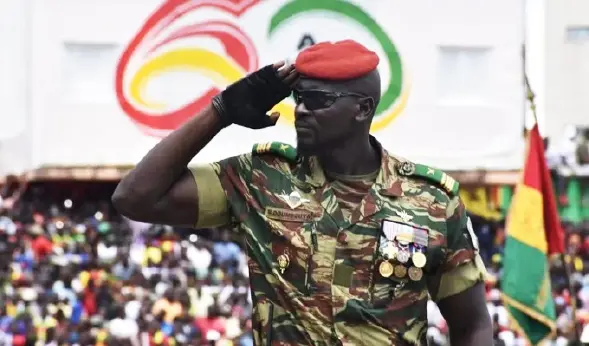
It all started with Mali, followed by Chad, Guinea, Burkina Faso and the most recent being Guinea Bissau which was foiled. The era of coup d’etat seems to have reared its ugly head back to Africa, especially in the Western part of the continent.
The first coup in West Africa which started with the Francophone countries took place in Togo on January 13, 1963 when Gnassingbe and his co-travellers assassinated President Sylvanus Olympio; this was followed by the October 28, 1963 coup in Dahomey, now Benin Republic with the coup led by Christophe Soglo that overthrew President Hubert Maga. It later spread to Anglophone countries that share common border with them; Nigeria, January 15, 1966 and Ghana, February 24, 1966.
Coup in the sub-region have taken these sequence in the past, there is the need for proactive measures on the part of neighbouring countries. You cannot stand aloof, sit and watch, pretending or feeling that the next victim will not be your beloved country.
It is interesting to note that coup in most cases usually lead to civil war if not well managed. Recall the Nigeria coup of 1966 which led to the 3 year pogrom which the country till date has not recovered from. Also the coup that took place in the Mano River Region equally led to the civil wars in Liberia and Sierra Leone. We should not allow negative history to repeat itself in the sub-region. The time for proactive measures by the leaders of the sub-region is now to avoid a resurgence of the past.
The question we should ask ourselves at this moment remains; are the leaders of the sub-region weak to take proactive and firm measures? Are the leaders being remote controlled by external forces? We should remember that it is better and safer to kill the mosquito within the house than allowing it enter inside our guarded mosquito net; at that stage, it may be too late to survive the deadly bites.
Making political statements, suspending the coup plotters from the sub-regional union, ECOWAS, and blocking incentives to the country do not make any meaning to the coupists. It is the innocent citizens of the country that bears the brunt while the coup plotters will be enjoying themselves with the resources and treasury of the country. The regional leaders and their foreign allies should start thinking out of the box for more decisive measures to nip the issue of coup from the bud and deciding more punitive measures to the offenders.
The sub-region definitely has its fair share of leadership challenges that usually come handy as excuses for the coup plotters. They include corruption; sit tight and autocratic leaders; which if not taken care of or being badly managed, definitely, no government in West Africa can be said to be safe.
Apart from the need by the leaders to ensuring peace and stability, they should also observe the tenets of democracy by promoting good governance, ensuring free and fair elections; freedom of the press and the judiciary, as well as ensuring economic prosperity, addressing poverty, among others. It is by observing and promoting these that coup d’états can be minimised or eliminated in the region and the continent as a whole. How far they observe these will show the seriousness of the leaders in safeguarding democracy; which the world sees as the best form of government, despite numerous challenges facing it not only in Africa, but in the rest of the world.
Despite the negative perception and rejection of coup as a form of change of government, most coups that take place in the region is usually caused by the leaders themselves. For instance, in Guinea, Mali, and Chad, heads of state removed from office had enjoyed dubious legitimacy. In Guinea, President Alpha Condé had been elected to a third term in less-than-credible elections. In Chad, Idriss Deby had been all but “president for life” until he was killed by rebels, only to be succeeded by his son in an extra-constitutional process. In Mali, the current bout of instability dates from the 2012 coup against longtime political strongman Amadou Touré. Current Malian President Assimi Goïta in June removed the country’s interim head of state, less than a year after Goïta initiated a coup against President Ibrahim Boubacar Keita and installed himself as interim Vice President.
West African countries should learn one or two lessons from the example of Senegal that have never had a military coup, no thanks to the strong commitment of the Senegalese people to the real tenets of democracy. The Senegalese have always resisted attempts by the political class to take them for a ride which usually culminates into anger, frustration, and then possibly, coup. The case of President Abdoulaye Wade stands out; that when in 2012 he sought for unconstitutional amendment of the constitution to give him room for third term in office, the people resisted, protested and eventually voted him out of power.
Our leaders should learn to be contented. Any leader that cannot achieve much within 10 years or 8 years in office is not a worthy leader. Moreso, no leader should claim or deceive himself by believing that without him the country cannot move forward or sustain the existing legacy.
We should learn to have a progressive and well mapped out succession plan. A good leader should start planning for his exit the moment he is sworn into office.
When you make your mark in office, your legacy will outlive you and you will remain a reference point, not only in the sub-region, Africa, but across the globe.
Resurgence of coup in West Africa
Comments