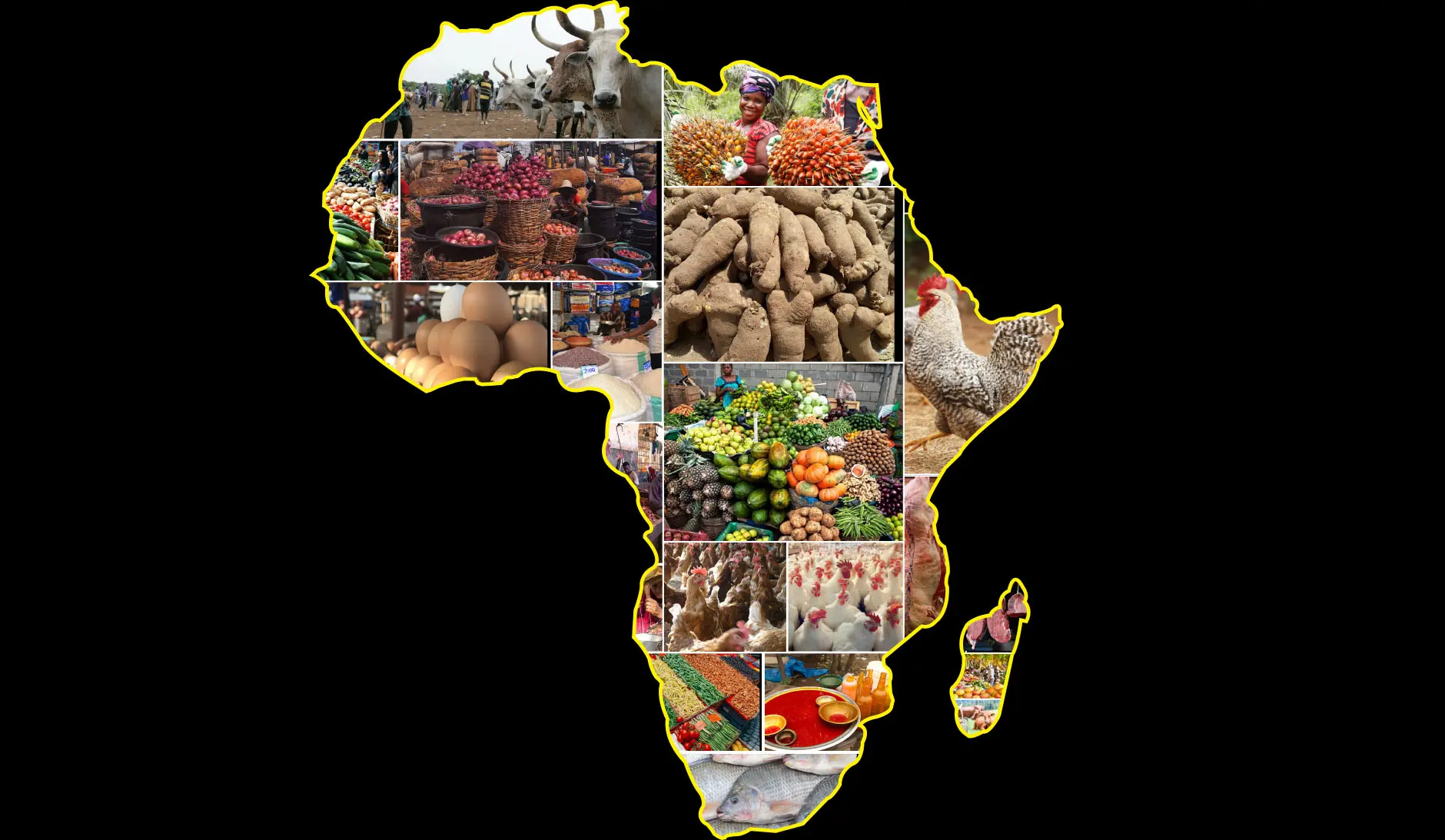
Food availability, hugely threatened by the Tripple Cs of Climate Change, Conflicts and Covid-19 remains a major problem for millions of Africans and the end, regrettably, does not appear in sight.
Food security is defined as a condition in which all the people, at all times, have physical and economical access to adequate, safe, and nutritious food, meeting their nutritional requirements and their food preferences for an active and balanced life. But sadly enough, it seems to be a tall order for many African countries.
A number of factors have combined to give Africa and its people a serious challenge bordering on food crisis. The factors which range from what is popularly referred to as Triple Cs of food security, that is, climate change, conflicts and the ravaging Covid-19, have also brought other agents in its camp. They are insecurity that is distinct from conflict, banditry, kidnapping, poverty and a range of social vices that have combined to put serious strain in the food chain process.
In Nigeria, for instance, since March 2020 when the federal government of Nigeria officially embraced international protocols to contain the ravaging Covid-19 pandemic, everything in the books, according to international best practices have been adopted through the presidential task force headed by the Secretary to the Government of the Federation (SGF), Boss Mustapha.
Despite spirited efforts by the federal government to mitigate the harsh economic effect of the ravaging Covid-19 in the country, the rampaging pandemic seems to have defied containment as it has shattered the world economy with Nigeria having its fair share. This has put the economy in the quandary resulting to serious threats on job cut across the strata of the economy.
Nigeria, a country of about 200 million people with huge population of unemployed youths, is faced with million job risks is certainly putting the country and its population on edge. Reports say the tourism sector, oil and gas, aviation, ports and harbour, private sector and many others are likely to be the worst hit. There are emerging signals that private sector employers may opt for job cuts to survive the effect of the coronavirus pandemic (COVID-19).
Numerous people have experienced job cuts in several sectors especially the banks and many mega companies have relocated from Nigeria leaving in its trail wailing families.
As if the economic quagmire is not enough, citizens are faced with numerous security challenges both on the roads and at their homes. They bear the cost of security, health and public utilities even as housing challenge has remained unabated.
Commuters groan on the parlous state of the roads just as travellers wail over attacks by armed robbers, bandits, kidnappers and insurgents. To add to the suffocating needs of the people, is the rising cost of food stuff especially rice which is the staple food for Nigerians.
Rising high cost of living without good standard of living have combined to add to the woes. Food stuff and transportation have plummeted without corresponding increase on earnings. Ditto several other African countries.
Experts in various sectors of the Nigerian economy have given indications that the COVID-19 pandemic has hit the private sector negatively as many firms are struggling to survive.
However, despite fundamental efforts and accomplishments in the battle against poverty in recent decades, many countries in Africa have been suffering from economic recession, and many Africans are profoundly affected by the dramatic fallout of livelihoods and income. There is a large number of people in Africa who live under the poverty line and are vulnerable to food insecurity.
The latest figures in Africa show that 73 million people suffer from acute food insecurity. From 2016 to 2018, Africa imported around 85% of its food from outside the continent, making an annual food bill of $35 billion, which is projected to hit $110 billion by 2025. This heavy dependence on world markets is hazardous for food security, particularly in times of prolonged crisis. African regions, especially the Sahel and southern Africa, have been harshly affected by climate change and drought since last year. The unprecedented locust outbreak in the Horn of Africa has put an additional pressure on regional food systems. Conflict hampers people’s access to food as farmers abandon their farms and do not bring their products to markets to avoid risking their lives. Hence, given the prevalence of conflict and political instability, the region is at great risk of food insecurity.
In light of the COVID-19 pandemic, the greatest public health threat of our time, not only the health of African people but also their socioeconomic status and food security have greatly been affected. The pandemic has led to various government-led restrictions and interventions to curb the spread of the virus on the continent wreaking havoc on the continent’s food supply, and compounding the already bleak picture of food security in Africa.
Africa and its more than one billion and 200 million people, no doubt, are facing serious food crisis with increasing difficulties on how to feed its teeming population. Although food, in the last three years has become a global challenge, its availability deteriorated in the last two years in particular with the advent of COVID-19 pandemic. The picture is startling.
In Nigeria, for example, there is another factor called mycotoxins which are the most under-prioritized, high-risk, and diffuse threat to public health and food and nutrition security in Nigeria. This was the submission of the Director- General, Nigeria Agricultural Quarantine Service (NAQS), Dr. Vincent Isegbe, at the University of Abuja while headlining the 14th Annual Conference and Workshop of the Mycotoxicology Society of Nigeria as lead speaker.
Speaking on the topic, ‘’Mycotoxins and Health Outcomes’’, Dr. Isegbe mentioned that the major classes of mycotoxins such as aflatoxins and ochratoxins impact cause food quantity and quality losses on a large number of agricultural commodities. They include grains, groundnut, dried fruits, spices, oilseeds, fruit juices, and other foodstuff and feed crops. He pointed out that ‘’mycotoxins are particularly destructive and dangerous because they affect crops that dominate the farmlands of Nigeria and the culinary culture of our people.’’
He further posits that mycotoxins were ‘’a crushing burden on the Nigerian food system’’ considering that they contaminate crops at all the points in the value chain –pre-harvest, harvest, drying, and storage. He noted that ‘’the adverse effects of mycotoxins at different stages of the crop production process cut down Nigeria’s annual crop output by 25 percent. The damage they do to crop quality limits the country’s access to the export market. Hence, mycotoxins reduces food availability in the local market, shrinks the incomes of stakeholders, and undermine our export competitiveness. Their damage also limits job creation in the agricultural sector.’’
In the African continent, 64 % more people became food-insecure in the last five years. Experts warned last year that the three Cs: namely Climate Change, Conflicts and COVID-19 would lead to more Africans going hungry, and as a result, 64 per cent more people in the continent became food-insecure between 2016 and 2020, with COVID-19 pandemic making matters worse, according to a recent report. Some 98 million people were affected by food insecurity in 2020 in the continent, up from 59.7 million in 2016, according to the report.
More worrisome is the release that Africa accounted for 63 per cent of the global total number of people who did not get adequate food in 2020, up from 54 per cent in 2019.The worse-affected region inside the continent was Central and Southern Africa. At least 40.2 million faced acute food insecurity in the region which represents an increase of around eight million people from 2019.
In 2020, 13 countries in Central and Southern Africa accounted for 26 per cent of the total number of people in food crisis in the continent. More than half or 54 per cent were in the Democratic Republic of Congo, while nearly 75 per cent of East Africa’s 33 million people affected by food insecurity were in Sudan, Ethiopia and South Sudan. These were also among the 10 most-affected countries hit by the global food crisis in 2020. In West Africa and the Sahel, including Cameroon and Libya, 37 per cent of the nearly 25 million people affected were in Nigeria which paradoxically boasts of Africa’s largest economy.
In northeast Nigeria, where nearly 4 million people are acutely food insecure, militants have increasingly attacked highways, reducing food movements and humanitarian access. In the rest of West Africa, 23.6 million people are projected to face crisis-level food insecurity, an increase of 40 percent from already record levels. FAO and WFP warn of additional spikes for at least 14 African countries experiencing a food crisis in 2021. COVID-19 will more than double the number of people facing food crisis, unless swift action was taken, according to the report. Conflicts and climate shocks have been the key drivers of acute food insecurity in Africa, especially in Central and Southern Africa.
But in 2020, the adverse economic effects of COVID-19 restrictions contributed to a sharp rise in the number of people in acute food crisis or worse. Market disruptions due to measures to contain the pandemic in West African nations like Nigeria contributed to the food crisis. At the same time, agricultural production had declined in southern parts of Zambia and Malawi and areas of Mozambique due to a rainfall deficit in early 2020.
On climate change, Cyclone Gati was the highest ever storm to hit Somalia. Infestation by desert locusts too was a threat to food security in the African region especially in East African countries such as Ethiopia, Kenya and Somalia. In March, a high-level panel of experts had warned about how the Triple Cs namely climate change, conflicts and the COVID-19, will impact Africa’s food security and development.
Conflict continues to be the primary driver of acute food crises in Africa. Attacks by militant Islamist groups in the Sahel, increased by 44 percent in 2020, contributing to the displacement of 1.7 million people, many of whom, require food assistance. Insecurity has also disrupted flows of food and trade.
In Ethiopia, food insecurity is especially acute in Tigray as a result of ongoing conflict. Reports of starvation and malnutrition are emerging while much of the region remains inaccessible to UN and aid agencies. Many of the 4.9 million Cameroonians facing acute food insecurity are concentrated in the country’s Anglophone Northwest and Southwest Regions where fighting continues between separatists and the military. Others have been displaced in Cameroon’s Far North Region, driven by escalating Boko Haram attacks. Fighting in the Central African Republic has included a deliberate rebel blockade of food and humanitarian supplies from reaching Bangui.
COVID-19 has had an aggravating effect on food insecurity across the continent. Border closures, lockdowns, and lost jobs have reduced food access. Food and livestock traders have experienced a surge of spoiled goods due to prolonged transit times.
West Africa however experienced above average food production in 2020 but because of transportation restrictions and distribution issues, the number of people facing acute food shortages is expected to increase.
Truckers have regularly lined up for miles and faced prolonged delays to deliver goods to market in East Africa.
In eastern DRC, the region with the continent’s largest forcibly displaced population, many people have been unable to flee across the border into neighboring countries.
Cities in Africa have historically not been included in food security evaluations as they have been relatively better off than rural regions. This calculation changed in the aftermath of COVID-19 as many cities saw their vulnerable populations face intense food insecurity pressure as a result of income-depriving restrictions. In South Africa, the 11.8 million people found to be facing food crisis largely reflects the effects of pandemic mitigation measures on urban households.
Some countries with the highest levels of food insecurity (DRC, Ethiopia, Mali, and Sudan) are facing multiple crises simultaneously. COVID has exacerbated this fragility.
Worst of all, Zimbabwe, Sudan, and South Sudan witnessed spikes in hyperinflation and currency depreciation that were kindled by years of political mismanagement, further aggravating levels of food insecurity. Coupled with COVID-19 prevention measures, households in Zimbabwe experienced income reductions of more than 50 percent in 2020. Floods in Sudan and South Sudan, southern African droughts, and East African locust surges were among the destabilizing climate-related events that increased food insecurity for millions. Sudan, which saw an additional 3.5 million people experience acute food insecurity in 2020, was struck by the worst flooding in 100 years as well as the worst locust outbreak in decades, which also affected Kenya, Somalia, Eritrea, and Djibouti.
Agriculture remains the backbone of the continent’s economy. Required attention given to it will help the continent prevail over its food challenges. As at today, Africa relies on exports of agricultural products such as cocoa, coffee, cotton, tobacco and spices to the nations of the world to earn significant foreign exchange. But the continent imports important foods such as cereals, vegetable oils, dairy products and meat in large quantities.
As a result, and sadly, trade among African nations in agricultural products as a percentage of Africa’s total agricultural trade remains below 20 percent, one of the lowest in any region. Total trade among African nations was only 2 percent in the period 2015–2017, compared with 67 percent in trade between European countries, 61 percent in Asian countries, and 47 percent in the Americas, according to UN trade agency UNCTAD.
AfCFTA (African Continental Free Trade Area) intends to reverse this trend. It has created the world’s largest free trade area, representing the 1.2 billion consumer market, and mandates states to remove tariffs and non-tariffs in order to boost shipments and services between nations, and boost economic growth in doing so.
However, since the trade began under the AfCFTA on January 1, 2021, only 36 African Union member states have ratified the agreement. It is in agriculture that the AfCFTA’s aspirations can be realized, especially by strengthening regional value streams integrated into priority products, led by a diverse private sector, inspired by small business owners, commercial farmers, miners and operators. Many economic communities in Africa have already identified strategic products for further improvement in regional streams of quality improvement: East Africa has given priority to rice, beans and dairy products among others. West Africa has given priority to millet, livestock, fish and aquatic products, among others. The most important products in Southern Africa are soybeans and nuts. This regional trend has the potential to include smallholder farmers including women and youth, as well as small and medium enterprises, and to link them to a major private sector that controls input and crop markets.
Enhanced integration of stakeholders in commercial value streams, ranging from farmers and miners, exporters and retailers, can create sustainable employment opportunities and enhance long-term, and uncontrolled productivity, food security and nutrition. The Food and Agriculture Organization (FAO) of the United Nations and the African Union have recently launched a program to assist nations in rehabilitating a new market.
One of the main objectives of the Framework for Boosting Intra-African Trade in Agricultural Commodities and Services is to help nations triple their trade in agricultural products and services, which is one of the commitments made by African governments under the resolution. (Malabo Declaration adopted in 2014). Governments need to design systems for buyers and suppliers, connecting small and medium producers, including smallholder farmers, to national and regional buyers.
Women and youths deserve to be included in these efforts. Looking ahead, one African market can create a more competitive commercial environment for agriculture, encourage more investment in a modern, dynamic, productive, inclusive and sustainable agricultural sector that can lift millions of Africans out of poverty.
Although the situation appears very bleak, Africa as a continent is not folding its arms waiting to be decimated. Infact, Africa has sought ways to lessen the dire impact on food security brought about by the pandemic. Led by the lessons learned from previous health crises, including the Ebola outbreak in 2014–2015 and the food crisis in 2008–2009, the African Development Bank responded to the epidemics by bringing together a robust public and private sector package, Feed Africa Response to COVID-19 (FAREC). Feed Africa Response to COVID-19 promotes the growth of resilience, sustainability, and self-sufficiency in food production and distribution by the African governments, farmers, and the private sector, particularly small and medium-sized enterprises. It also responds to minimize COVID-19–related disturbances to the value chain of agriculture. As of mid-June 2020, FAREC assisted 23 African countries in finding capital in current bank-financed farm loans to fund farm inputs, building “green corridors” for a free flow of food, and stabilize food prices, via the targeted release of grain and the replenishment of food stocks.
Moreover, some African countries also provided stimulus packages in the forms of cash or food aimed at assisting those citizens who lost their jobs and income because of COVID-19 restrictions.
In spite of measures taken by different African countries to ensure availability of food security, the times are still very challenging. Nigeria, like many of her sister countries have embraced all sorts of means to survive the ferocious hunger in the land and the implication is the increasing crime at hairs breath.
Despite the woes and lamentations, Africans look forward to a merry Christmas and prosperous New Year celebrations believing that someday, it will be ‘Uhuru’.
Africa and challenges of food security
Comments