Nigeria can change the African story – Burundian Ambassador Mpfayokurera
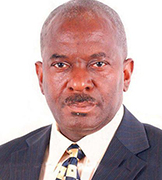
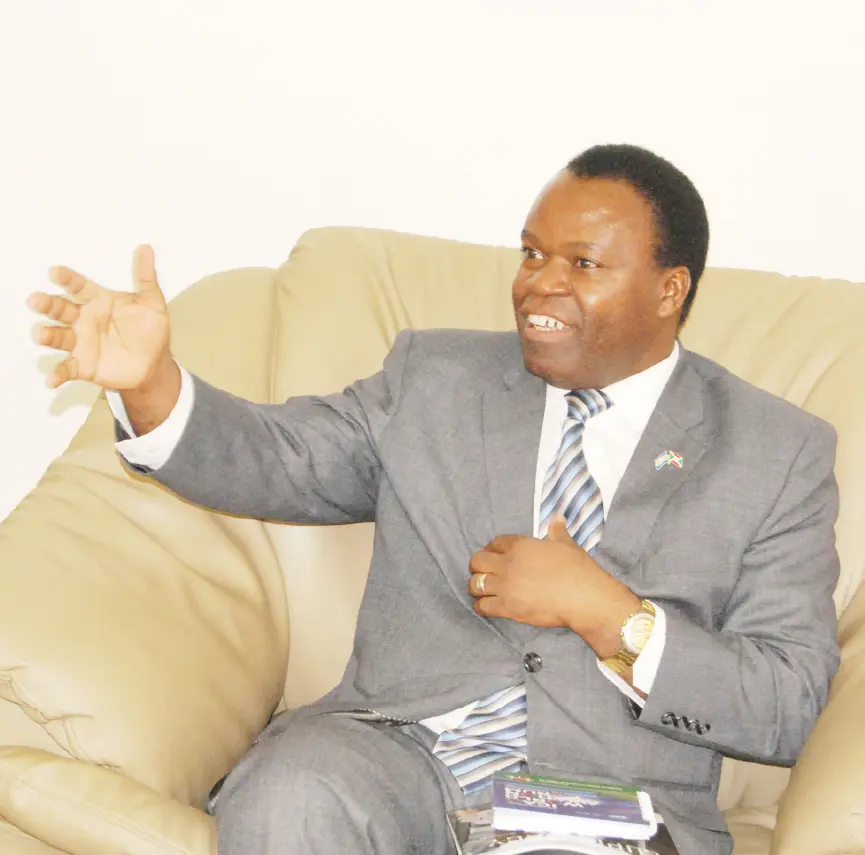
Soft-spoken, focused Burundian Ambassador to Nigeria, His Excellency Emmanuel Mpfayokurera, shares some revealing
insights with The Supremacy Magazine on a wide range of issues touching on Burundi-Nigeria relations. He also strongly
believes that given Nigeria’s vast natural and human resources endowments, she indeed can lead Africa’s transformation.
He spoke with PRINCESS ABIGAIL AMALAHA and LOUIS ACHI
What do you consider the key challenges since you assumed duty in Nigeria?
Well, I have experienced some long delays running into even months in trying to book and consummate appointments with
the chief officers of your ministries and agencies. I have not yet learned the “short-cut methods” yet. It can be
unsettling really. There have been very few exceptions.
What are the trade relations like currently between Burundi and Nigeria?
In Burundi, we produce coffee, tea, solid minerals. We are also trying to transform some agricultural products. We have
avocados in monumental quantity. We are also trying to see how we can make oil from avocados. I have actually asked for
an appointment with Nigeria’s Minister of Trade, Investment and Industries. As soon as we get into contact, we will
develop some trade relations that should benefit both countries. I really don’t know if there are some of the products
which you export to Burundi. For us, we can export tea. Am sure you import tea and coffee from everywhere. Am sure we
can really develop stronger trade relations. This is because we have really decided to boost the South-South
cooperation; the South-South trade. This is our real goal.
Since your posting to Nigeria, have you facilitated trade delegation visits from Burundi to Nigeria or from Nigeria to
Burundi?
Not yet, but I am in contact with the head of the Chamber of Commerce in Lagos. I have an appointment with him for the
end of May. We will come up with a plan to send a delegation of investors to Burundi and investors from Burundi to
Lagos.
In November last year, you requested the Hon. Minister of Education Adamu Adamu to avail Burundi the education system
curriculum used in Nigeria, including Technical and Vocational Training. What is the update on your request?
Actually, I came to Nigeria when the letter was here and asked for an appointment with the Minister of Education who I
must state has been very wonderful. He was the first Minister I met. His response lacked the kind of delay I have
subsequently experienced in other efforts to interface with other agencies and ministries. He has been very dynamic and
I really do thank him for this cooperation between Burundi and Nigeria.
I asked how we can improve the technical vocational school curriculum in Burundi and he provided it. We really thank the
government of Nigeria for this. We do believe that skills acquisition is by improving the curriculum. We see Nigeria as
a very dynamic country and a clear leader. You have ingenious people that can make things happen. I really admire
Nigerian people because of this ingenuity. I think Nigeria is number one in Africa.
Burundi will be holding a referendum on May 17. Could you share with us the essence of that political exercise?
Burundi had a constitution which was voted for in 2005, before the current regime won the election. It was written by
the previous government who lost the election. That government put some inconsistencies in the constitution. Two
articles were conflicting - to the extent that to interpret the constitution, you will take the one which gives you
advantage. The current government wants to change this in a way that will make the constitution understandable by
anyone. The second is that the government of Burundi integrated the East African community which is a community
comprised of Burundi, Rwanda, Uganda, South Sudan, Kenya and Tanzania - six countries. So we want to put it in the
constitution.
Third, because of the political situation which came from May 2015 when they say the president was running a second
constitutional term. The Burundi government organized an internal dialogue and the people asked for some of the things
that will be included in the constitution. So we are going to amend 19 articles in the constitution. The main change I
can foresee from the constitution is that we used to have two terms of five years for the president. We moved it to
seven years. All people from the grassroots participated in this dialogue.
If you were not a diplomat, what other profession would you have chosen?
Actually I would have been a teacher. I used to be one really. I think by the time I finish with this diplomatic career,
I will return to teaching. Am going to teach business studies; how to start a business, write a business plan and how to
source funds. I noticed that we went to school and were taught to be civil servants, probably to replace the colonizers.
I noticed that the private sector, especially in my country is still none existent.
It is not up to one tenth of the public sector. So to make sure we advance like others we need to train people and show
them that through a more intensive private sector participation they can develop the country, pay tax and others. I
believe that’s one of my goals. In Burundi we need to start teaching entrepreneurship. Most people in my country go into
non-profit organisations. Why do they go into non-profit instead of going into for-profit organisations? After my
diplomacy career, I am going to address this.
Have you learned any of the Nigerian languages?
You have so many. I am still focusing on my goal which is to bring Nigerian investors to invest in Burundi. We have
nickel which is combined with iron, copper, vanadium, platinum and others. It was discovered in 1968. The nickel content
of this mix is about 40 per cent. It is roughly estimated at 268 billion pounds. If we start exporting it, even as
unprocessed raw materials, we’ll make it. Platinum is even more expensive than gold. Burundi has a bright future. It is
a country to invest in.
What’s your favourite Nigerian dish?
I like pounded yam. It has soluble fibre which can protect you from cancer. We use to have yam in Burundi when I was
growing up. We used to have two types of yam but both disappeared. We no longer have them. I am happy to come across yam
here.
You look quite youthful. Do you do any sports?
Well, I do little bit of hill climbing close by here. It’s my favourite. Sometime I go early in the morning. Sometimes,
I go in the evening. I do like here because it is secure.
Let’s take a message from you to Nigerians
Nigerians, you are a rock. Nigerians you are number one. Nigerians, you should be proud of being Nigerians – not Igbo,
Hausa, Yoruba, Ijaw, et cetera. You should make sure the country the Almighty God gave you should help build Africa. God
gave you so much natural resources and I will be happy you start your own refineries, not just exporting crude. I
believe you can do it because you have the matching resources and capacity to lead Africa.


Comments (2)
This prologue offers a rich and insightful overview of Sierra Leone’s history, challenges, and potential, while setting an optimistic tone for leadership and national transformation.
Nice read.